
How India’s Largest Open University, IGNOU is Reimagining Access, Inclusion, and Technology to Boost Higher Education Enrolment in the Country....
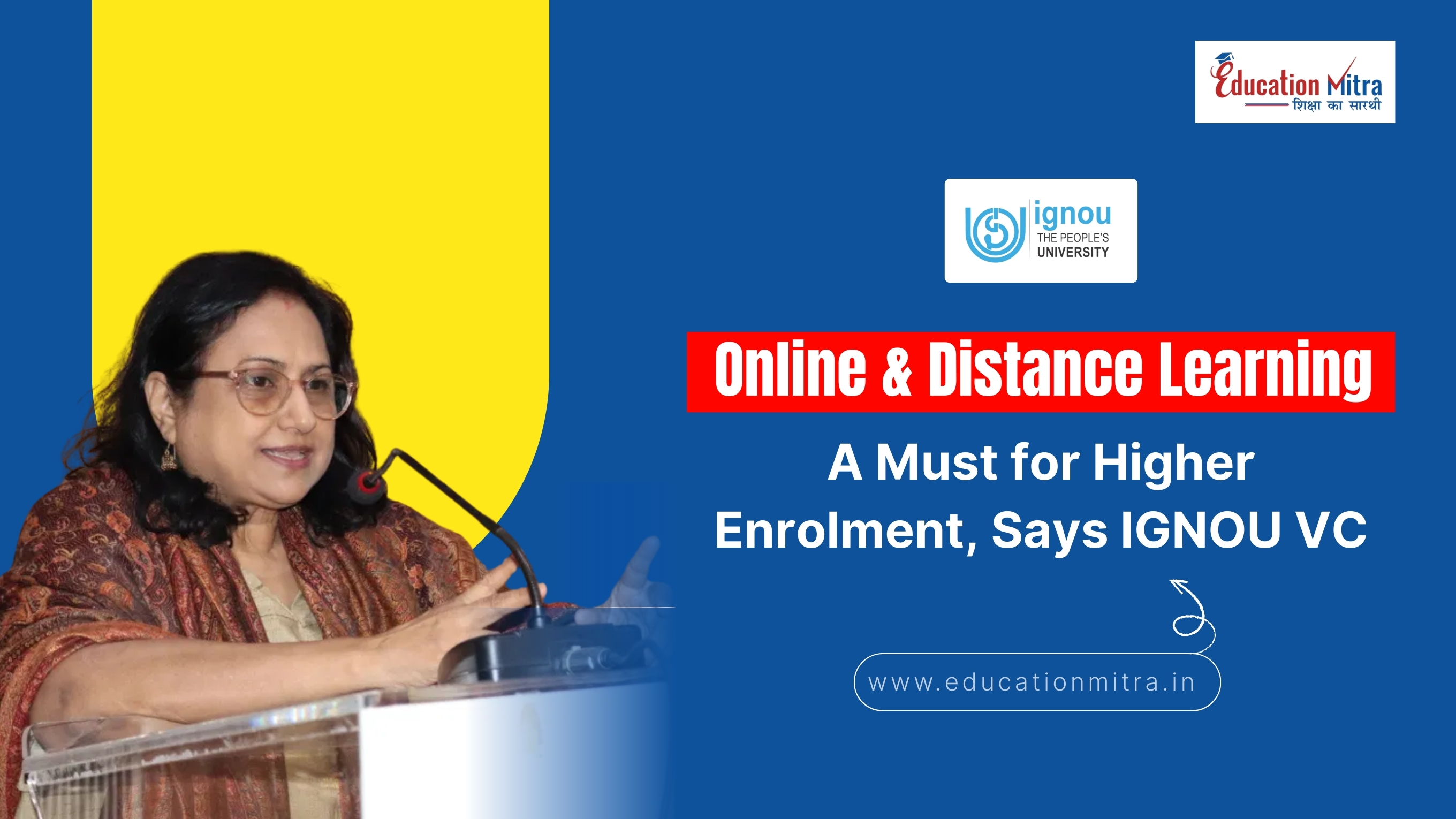
As India plans to increase its Gross Enrolment Ratio (GER) in higher education to 50% by 2035 under the framework of the Viksit Bharat Shiksha Adhishthan, the Country’s largest university, IGNOU, is preparing for a complete digital shift. To achieve GER, the Vice Chancellor and also the first female Head of Indira Gandhi National Open University (IGNOU) said, it is not possible to fulfill the target by relying only on on-campus courses, open and distance learning is indispensable” to meet the expectation of the system.
Top Universities in India
Online and distance learning courses: Why does it matter?
Indira Gandhi National Open University (IGNOU) is one of the oldest and widest universities, spread across the country with nearly 3.9 million students. This UGC-DEB-approved and NAAC-accredited university is known to offer flexible and affordable online and distance learning courses, making education accessible to all regardless of location and budget. Every year, approximately 1.5 million new students join IGNOU to enhance their qualification while managing their other obligations.
While addressing the GER in higher education, VC Uma Kanjilal emphasized that online and distance learning education- collectively known as Open and Distance Learning (ODL)- must be strengthened and modernized so more students can pursue higher studies regardless of their location or background.
IGNOU’s Digital Transformation Strategy:
To make higher education easily accessible and flexible, IGNOU is all set to sweep digital transformation, relying on inclusivity and automation. Key elements of this strategy include:
A Unified Digital Platform - To centralize student services, IGNOU is now building a single, integrated app that helps teams and students manage admissions, assignments, and exams from one place.
Automation – IGNOU plans to launch an on-screen and automated evaluation system, which promises faster turnaround times and better tracking of student performance.
E-Assignments and Projects – Soon, IGNOU will build an online platform where students can upload or download assignments and projects.
Expansion of Regional Languages – To promote language inclusivity, IGNOU has partnered with the state government, including Odisha, to translate courses into regional languages. IGNOU plans to provide academic support in at least 12 Indian languages over the next two years, and 22 languages within three years.
Employment Focus – IGNOU is working to make its programme industry-relevant. Through collaboration with the Ministry of Skill Development, the university is embedding employability-oriented skill modules into its curriculum.
Television & Broadcasting - To reach learners in areas with limited internet connectivity, IGNOU is launching 50 dedicated educational TV channels. These channels will broadcast counselling, lectures, and study support programmes designed to supplement online learning and assist students in remote regions.
Challenges
Despite its legacy and decades of experience in educating young minds through online and distance courses, IGNOU faces challenges in streamlining operations. Fragmented regulatory oversight — with programmes falling under different bodies such as UGC, AICTE, or NCTE, depending on the course — complicates administration. Simplifying these regulations would make it easier for open universities to operate more efficiently and adapt quickly to changing learner needs.
Conclusion
India’s higher education is transforming with the involvement of technologies. Under the Viksit Bharat Shiksha Adhishthan, it is expecting the Gross Enrolment Ratio (GER) in higher education to 50% by 2035. The IGNOU VC claimed that it is impossible to achieve the set target without online and distance learning courses.
Need Expert Guidance?
Book a free 1-on-1 counselling session with our expert.


Find Your Perfect University
Answer a few questions & let our AI suggest the best universities for you.
University Match
Latest Programs
Top Recommended Programs


Latest Blogs
You Might Also Like
Take the First Step Towards Your Dream Career
Connect with our education experts today to discover the best university, compare programs, and begin a smooth admission journey with complete guidance and personalized support..
- Choose Your Mentor
- Instant Expert Guidance

- Education Mitra
- >
- News
- >
- Online & Distance Learning: A Must for Higher Enrolment, Says IGNOU VC