
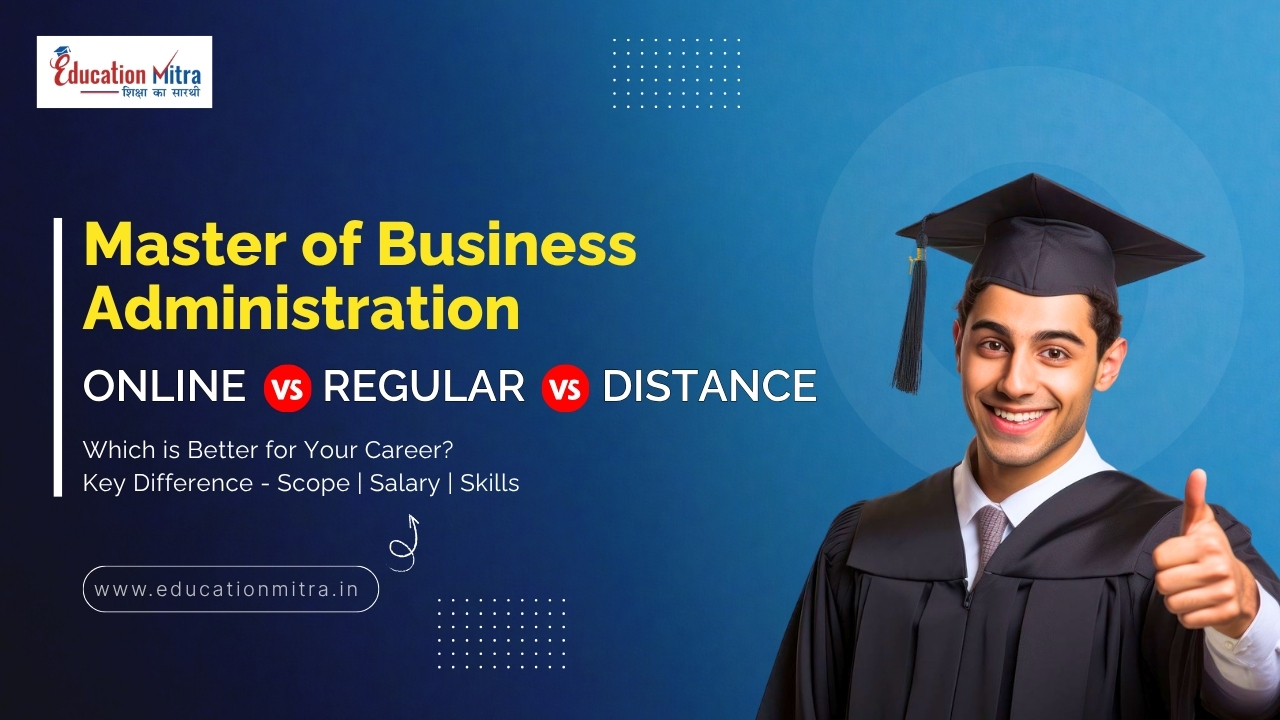
Explore the key differences between Online MBA, Distance MBA, and Regular MBA. Compare learning modes, fees, career scope, and choose the best option ...
Master of Business Administration (MBA) is one of the most popular degree programs, chosen by graduates to advance their knowledge and skills in their chosen field, aiming for business management. Usually, those who have completed a BBA or other bachelor’s degree and wish to develop their career in business management and administration choose an MBA program. However, with a vast range of specializations, covering each industry and stream, such as sales, journalism, e-commerce, fiancé, accounts, business operations, logistics, and so on, students from different fields prefer this multidisciplinary program to elevate their career growth.
Gone are the days when aspirants depended on only a regular MBA program; with the involvement of digital learning, learners are now choosing online and distance modes as well. Unlike a traditional course, the online MBA or distance MBA offers learning flexibility, making it an ideal option for working professionals and those who can’t join on-campus regular classes.
Though all three modes are highly beneficial and offered by UGC-approved universities, choosing one that aligns with your unique aspirations is crucial. Thus, in this blog, Education Mitra uncovers the difference between them to help you make an informed choice for a seamless learning journey.
Top Universities in India
Online MBA vs Distance MBA vs Regular MBA – Everything You Need To Know
While all three modes help you to acquire industry-relevant skills and knowledge, focusing on business management and administration, the course delivery methods vary. Here, we will understand the difference between them. To know more about this dynamic degree, get personalized guidance from industry experts and choose wisely.
Regular MBA Course
A regular MBA or traditional MBA is a full-time, on-campus program. It demands regular face-to-face classes, assessments, and exams. Students are required to visit the campus in-person and follow a structured schedule. The degree is basically designed for those who can solely dedicate their 2 years entirely to studies.
| Learning Modes | Ideal For | Pros | Cons |
|---|---|---|---|
| Physical classroom setup, face-to-face interaction, campus life | Recent graduates with less than 3 years of experience | Networking opportunities, extracurricular activities, placement assistance | High fees, relocation/commute required, less flexibility, offline exams |
Online MBA Course
An online MBA program is the most preferred mode among learners, especially for working professionals, entrepreneurs, career switchers, and remote learners. With 100% online classes, assessments, and exams, it offers real-time interaction, ensuring the best learning experience.
| Learning Modes | Ideal For | Pros | Cons |
|---|---|---|---|
| Live lectures, recorded sessions, LMS access, webinars, discussion forums | Working professionals, entrepreneurs, remote learners | Flexible, cost-effective, global networking, no relocation, real-world exposure | Requires discipline, limited physical interaction |
Distance MBA Course
A distance MBA course is primarily ‘Correspondence-Based,’ offering a self-paced learning ecosystem through soft or hard copy learning material and recorded sessions. Unlike online mode, there will be no or very few online classes available; students need to train themselves through the study material provided by the institutes.
| Learning Modes | Ideal For | Pros | Cons |
|---|---|---|---|
| Self-paced learning via study materials (PDFs/hard copies), limited recorded lectures | Budget-focused learners, remote students, working professionals | Affordable, flexible, easy access | No peer interaction, limited networking, minimal placement support |
Note: Learners often confuse online and distance learning modes and choose without knowing the depth. While opting for an online mode, students are required to attend online classes, submit assessments, and take exams through an online proctoring system. On the other hand, distance MBA does not require online classes or assessments; students need to learn on their own and take an exam at a designated center.
Career Opportunities After Completing an MBA Course
After completing an MBA, the learners can explore career options in a variety of fields, as per their chosen specializations. The MBA graduates may expect a salary of INR 4-7 LPA upon starting. With years of experience, ability, and productivity, they earn up to INR 20 LPA.
| Job Profile | Approx. Salary Range |
|---|---|
| Supply Chain Manager | ₹5 – ₹12 LPA |
| Financial Analyst / Finance Manager | ₹4.5 – ₹8 LPA |
| Operations Manager | ₹5 – ₹10 LPA |
| Marketing Manager | ₹5 – ₹10 LPA |
| Business Development Manager | ₹5 – ₹8 LPA |
| Human Resource Manager | ₹7 – ₹15 LPA |
| Entrepreneur / Startup Founder | ₹20 – ₹50+ LPA |
| Data Analyst / Business Analyst | ₹4 – ₹8 LPA |
| Project Manager | ₹6 – ₹12 LPA |
| Strategy Consultant | ₹5 – ₹10 LPA |
Nowadays, employers demand multitasking, skilled professionals who can make operations smoother and drive growth in the organizations, rather than preferring the mode of a degree. Thus, pursuing an online, distance, or regular MBA from a UGC-approved university offers the same value in the job market, valid and equally accepted.
Online MBA Vs Distance MBA Vs Regular MBA – Eligibility and Fee
Mode
| Criteria | Online MBA | Distance MBA | Regular MBA |
|---|---|---|---|
| Average Fees | ₹1 – ₹3 LPA | ₹80,000 – ₹2 LPA | ₹2.5 – ₹5 LPA |
| Academic Qualification | UGC-approved Bachelor’s Degree | UGC-approved Bachelor’s Degree | UGC-approved Bachelor’s Degree |
| Professional Experience | Not Required | Not Required | 1–3 Years Required |
| Entrance Exam | No (Merit-Based) | Direct Admission | CAT, MAT, XAT, etc. |
| Age Limit | No Age Limit | No Age Limit | As per University Norms |
Conclusion
In 2026, education is more flexible, affordable, and easily accessible than ever. Whether you choose online, distance, or regular MBA, what truly matters is your skills, consistency, and career focus. The MBA course offers high-paying job opportunities and a stable career ahead. Get expert guidance and choose the one that best fits your expectations to have a smooth learning journey.
Need Expert Guidance?
Book a free 1-on-1 counselling session with our expert.


Find Your Perfect University
Answer a few questions & let our AI suggest the best universities for you.
University Match
Latest Programs
Top Recommended Programs


Latest Blogs
You Might Also Like
Take the First Step Towards Your Dream Career
Connect with our education experts today to discover the best university, compare programs, and begin a smooth admission journey with complete guidance and personalized support..
- Choose Your Mentor
- Instant Expert Guidance

- Education Mitra
- >
- News
- >
- Online vs Distance vs Regular MBA: Which One is Best For You in 2026?