
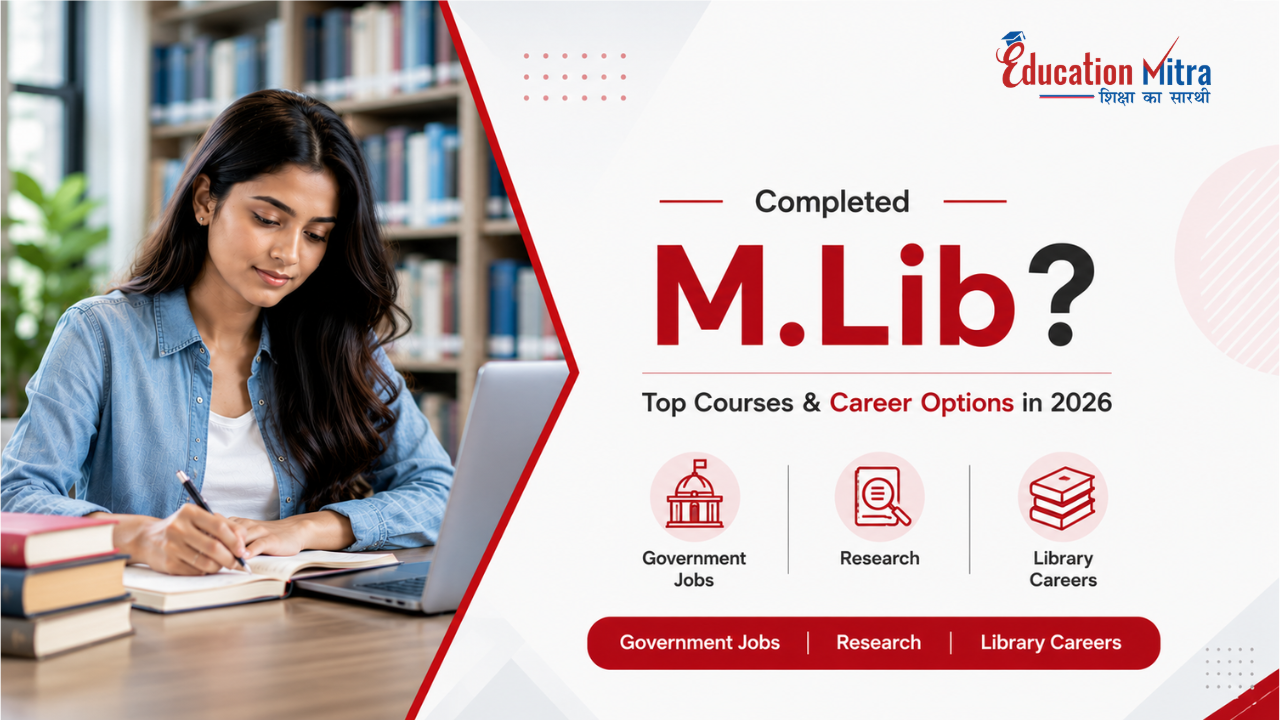
Explore the best courses and career opportunities after M.Lib in 2026. Learn about Ph.D., DBA, UGC NET, digital library certifications, government job...
A Master of Library and Information Science (M.Lib or M.Lib.I.Sc.) is a professional postgraduate degree, designed for learners who have completed their B.Lib or equivalent degree from a UGC-approved university and are willing to gain advanced expertise in library and information science. Besides regular on-campus degrees, students can now pursue this dynamic program through online and distance learning modes, enhancing their academic qualifications without hampering their jobs and family obligations.
The Online M.Lib course equips learners with advanced knowledge of library management, digital information systems, research methodology, cataloguing, documentation, knowledge organization, archives, and information technology. The degree holders may explore careers across domains, such as information centers, educational institutions, government departments, research organizations, museums, and corporate knowledge centers.
If you are someone who has completed the M.Lib course and is looking for higher education courses and career options, this blog covers it all. There are several options available after this master's degree; students can opt for relevant jobs in the corporate world, pursue higher education programs, or can prepare for competitive exams. The further actions depend on the individual’s own aspirations and professional goals.
To know more about online and distance learning courses, book a personalized guidance session with Education Mitra’s experts and choose wisely.
Top Universities in India
Is Pursuing Higher Studies After M.Lib/M.Lib.I.Sc. Worth It?
Although a Master's in Library and Information Science is a professional degree program, empowering learners with in-demand skills that open doors to careers in educational institutes, research centers, museums, and more. However, pursuing a higher education or professional certifications helps graduates specialize in research, digital information systems, academic administration, and knowledge management. These qualifications improve career prospects, increase earning potential, and open opportunities in universities, research institutes, government organizations, and multinational corporations.
Best Course and Career Options Available for M.Lib Degree Holders
After completing a B.Lib, many working professionals, students, and remote learners are actively opting for an M.Lib course to gain in-depth expertise, focusing on library and information science. The course helps to explore various government and private jobs – right after the degree. Also. There are several Ph.D/Doctoral program and professional certificates available to gain career advancement. Scroll down and check the best courses and career options after an M.Lib program.
1. Doctor of Philosophy (Ph.D.) in Library & Information Science
A Ph.D. in Library & Information Science is the highest academic qualification in the field and is ideal for graduates interested in research, innovation, and higher education. The programme focuses on advanced research methodologies, digital knowledge management, information retrieval systems, library automation, and scholarly publishing. It prepares candidates for senior academic and research positions in universities and research organizations.
Career Options
- Professor
- Research Scholar
- Library Scientist
- Academic Consultant
- Information Researcher
2. Doctor of Business Administration (DBA)
An offline and online DBA course is an excellent option for M.Lib graduates who wish to enhance their academic qualifications and aim for leadership, academic administration, consulting, or institutional management roles. Unlike a traditional Ph.D., the DBA emphasizes applied research and strategic decision-making, enabling professionals to solve organizational challenges while preparing for senior administrative and leadership positions.
Career Opportunities
- Academic Administrator
- Education Consultant
- Knowledge Management Consultant
- Policy Advisor
- Institutional Director
3. UGC NET / SET Preparation
For graduates aspiring to become Assistant Professors or pursue research fellowships, preparing for the UGC NET or State Eligibility Test (SET) is one of the most rewarding options. Qualifying for these examinations opens doors to teaching positions in colleges and universities and provides eligibility for Junior Research Fellowship (JRF), depending on the examination and score.
Career Opportunities
- Assistant Professor
- Research Fellow
- Guest Faculty
- Academic Researcher
- University Lecturer
4. Digital Library & Information Management Certification
As libraries increasingly adopt digital technologies, certifications in Digital Library Management, Library Automation, Information Systems, KOHA, DSpace, RFID, and Digital Archiving have become highly valuable. These short-term programmes help professionals develop practical skills in managing digital repositories, electronic resources, institutional databases, and modern library software.
Career Opportunities
- Digital Librarian
- Information Manager
- Digital Repository Executive
- Library Automation Specialist
- Knowledge Resource Manager
5. Competitive Exams and Government Jobs
A UGC-approved M.Lib degree provides eligibility for competitive exams that require an undergraduate/postgraduate degree. Students can prepare for UPSC, SSC, State PSC, and other administrative services.
Career Opportunities
- Librarian
- Information Officer
- Documentation Officer
- Archivist
- Library Superintendent
Career Options for an M.Lib Graduate
Besides pursuing higher education and certifications, M.Lib graduates can directly explore rewarding careers in both the government and private sectors.
Here are some of the most preferred government and private career options for the M.Lib Graduates.
| Government Sector | Corporate & Private Sector |
|---|---|
| Government Librarian | Corporate Librarian |
| Information Officer | Knowledge Manager |
| Documentation Officer | Digital Librarian |
| Archivist | Information Specialist |
| University Librarian | Research Information Executive |
| Museum Library Officer | Content & Documentation Manager |
Quick Review Table
Let’s do a quick review of course and career options after completing an M.Lib degree in India.
| Option | Type | Duration | Top Career Opportunities |
|---|---|---|---|
| Doctor of Philosophy (Ph.D.) in Library & Information Science | Ph.D. Degree | 3–5 Years | Professor, Research Scholar, Library Scientist, Academic Consultant, Information Researcher |
| Doctor of Business Administration (DBA) | Ph.D. Degree | 3–5 Years | Academic Administrator, Education Consultant, Knowledge Management Consultant, Policy Advisor, Institutional Director |
| UGC NET / SET Preparation | Employment | Immediate | Assistant Professor, Research Fellow, Guest Faculty, Academic Researcher, University Lecturer |
| Digital Library & Information Management Certification | Professional Certification | 6–12 Months | Digital Librarian, Information Manager, Digital Repository Executive, Library Automation Specialist, Knowledge Resource Manager |
| Government Sector Careers | Employment | Immediate (After Selection) | Librarian, Information Officer, Documentation Officer, Archivist, Library Superintendent |
Final Thoughts
Pursuing a Master's in Library Science (M.Lib) will be a strategic move for B.Lib graduates who wish to gain growth in their careers. This postgraduate degree opens doors to various government and private jobs across industries. Moreover, to enhance research abilities, focusing on library and information science, the students can opt for higher education programs, such as Ph.D and DBA. With the growing adoption of digital libraries, institutional repositories, and knowledge management systems, qualified M.Lib professionals are expected to remain in demand across multiple sectors in 2026 and beyond.
Stay connected with Education Mitra, book a personalized guidance session, and explore 100+UGC-approved universities or courses to enhance academic qualification, enabling career advancement.
Need Expert Guidance?
Book a free 1-on-1 counselling session with our expert.


Find Your Perfect University
Answer a few questions & let our AI suggest the best universities for you.
University Match
Frequently Asked Questions
Have any Doubts? Let's Clear Out
What are the best career options after completing an M.Lib?
After completing an M.Lib, graduates can pursue careers as librarians, information officers, digital librarians, archivists, documentation officers, knowledge managers, research associates, and academic professionals.
Which course is best after an M.Lib for career growth?
Can I get a government job after completing an M.Lib?
Is pursuing higher studies after an M.Lib worth it?
Which certification is most valuable after an M.Lib?
Latest Programs
Top Recommended Programs


Latest Blogs
You Might Also Like
Take the First Step Towards Your Dream Career
Connect with our education experts today to discover the best university, compare programs, and begin a smooth admission journey with complete guidance and personalized support..
- Choose Your Mentor
- Instant Expert Guidance

- Education Mitra
- >
- News
- >
- What to Do After M.Lib? Best Courses & Career Options in 2026